
Omote no Maki (kihon waza)
Notes from a seminar on a hot day
Lombardzijde, 18/7/1999
taught by P. Demuynck
NOTE: the intent of these kata descriptions is to inform, not to "teach" Tamiya ryu. Please read the statement at the bottom.
During the opening ceremony, the sageo is held over the thumb, the sword is carried at 30° from vertical.
For to rei, the sword is transferred to the right hand, with the index on the tsuba and the sageo over the right thumb. The kojiri is placed on the floor to the right " as if stabbing with a spear", and the sword laid down so the tsuba is in front of the left knee. After bowing, the right hand takes the sageo, then follows the saya to grasp the sword again with the index on the tsuba. The sword is picked up and placed vertical in front of the centre, the left hand grasps the saya 1/3 from the floor and slides down, then brings the kojiri to the centre to be inserted in the obi. The sageo is passed over the saya, then tied under the sword.
To finish, the sageo is pulled loose (with the left hand), the sword is pushed forward so the right hand can take over, the index is placed on the tsuba, the sageo over the thumb. After bowing, the sword is picked up with the righe hand until it's in a 45° angle to the floor, then brought directly to the left side.
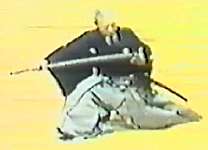
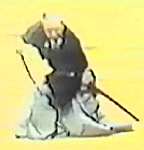
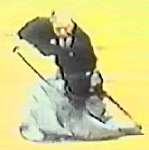
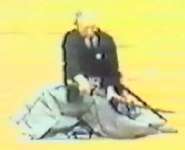
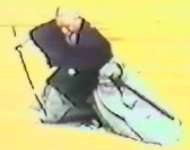
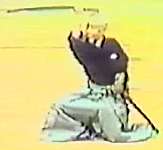
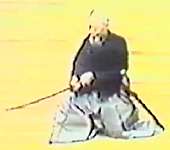
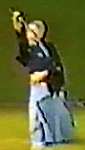
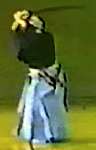
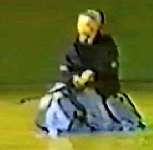
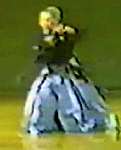
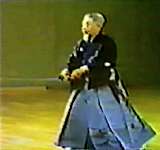
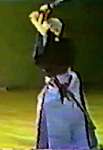
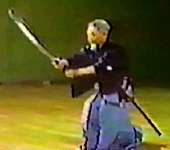
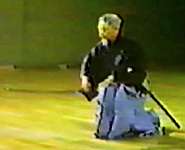
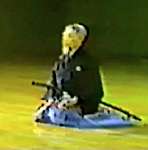
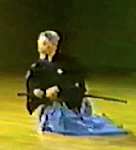
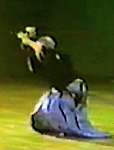
Pictures on this page are taken (without permission) from the "Nihon Kobudo" video on Tamiya Ryu Iaijutsu, and an unlabeled koryu embu tape. The excellent "Nihon Kobudo" video covers a lot more than the Omote no maki (it claims to cover all the iai katas in Tamiya ryu, but I am unqualified to confirm this).]
Inazuma
Starts in seiza. Teki sits a long way of, slightly to the right. Thus the kata is performed on a line somewhat to the side. Since teki is far off, the left hand grasps the tsuba before the right. Draw and rise, advancing the right foot, and cut nukitsuke over the elbows as teki attempts to cut down. This is a cut at tekis eye level. Maintain pressure. Raise the sword in a seitei-like furikaburi while bringing up the left foot, advance the right again and cut to horizontal. All details are very seitei-like, except the stances are somewhat wider and deeper. The feet are always parallel to the front.
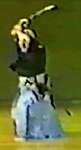
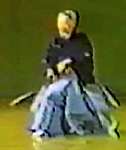
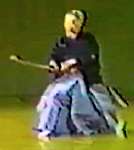
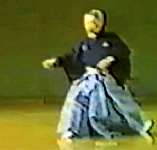
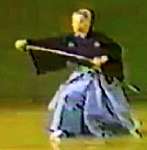
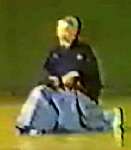
Now perform ashisabaki, taking jodan (with jo-ha-kyu feeling) while withdrawing the right foot (trick: increase speed when kissaki reaches eye level), step back with the left foot while taking gedan (remember ki-ken-tai-ichi), then very slowly raise the sword to chudan, which here means the tip is at suigetsu height, and from this position perform yoko chiburi. Perform noto as in seitei. The right hand is slid off the tsuka during the first step back. Maintain zanshin to the end.
Oshinuki
Teki sits close on your left, and grasps his tsuka. Advance the left knee to the left slightly (in kiza) and strike down with your tsuka on his hand, turning the sword so the edge faces down (right hand is on the hip). Grasp your tsuka without losing control of his, pull back your saya, then as he moves away cut nukitsuke while advancing the right foot. The cut is to his do, rather low, and since he is close, so is the cut. While the tsuka strike was to a 45° angle to the left, this cut is to teki's body, which is 90° to your left.
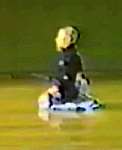
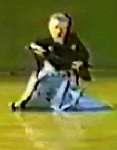
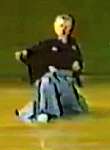
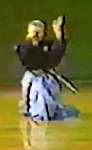
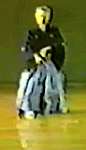
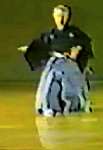
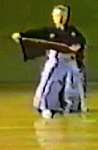
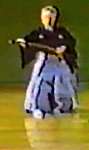
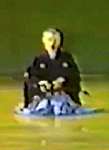
Now teki attempts a cut to your right shin. Withdraw the right foot towards the left knee, and take soetetsuki no kamae. Then, while performing ashi sabaki (may be done with a jump) tsuki and withdraw the blade. Unlike in seitei, the left hand slides up to the tsuba and back to the middle of the mune during the tsuki. Then, the sword is raised (with left hand still on the mune) with the feeling of protecting the head, while rising, ending in jodan. The left foot steps back while taking gedan, then chudan etc.
Yokemi
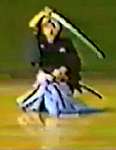
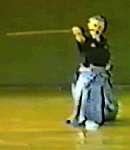
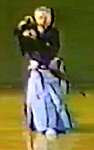
Teki attacks with a cut to the head. Draw upward in uke nagashi (45°) while sitting up on the knees and moving the right knee back slightly to hanmi, then advance the right foot and cut onehanded to teki's right men. Then rise while keeping the sword horizontal and pointing to the right, with the feeling of pushing teki away with your right fist. Advance with the left foot and assume tsuki position (without moving back the right hand). Tsuki position is with left foot forward, right hand close to the right eye, edge pointing up, mune resting on the left fist between thumb and index. The left arm is extended horizontally as far as possible. The feet must remain parallel.
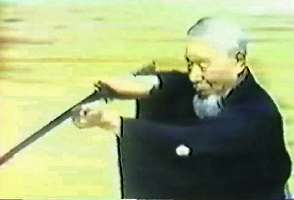
Perform tsuki to the suigetsu and pull back, then raise the sword while lowering the right knee next to the left foot and cut while advancing the left foot. Rise to jodan, step back with the left foot to gedan etc.
Mawari kakari
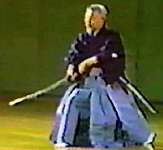
This is a standing kata. To end up at your starting point, you first take 3 steps (starting right) 45° to the left front while watching shomen, then turn so shomen is on your left. Start as in seitei soetetsuki. On the 3rd step the right foot is put down pointing to the left, turn left and step back with the left foot while cutting horizontally at do level. Take care not to bring the tsuka within tekis reach during nukitsuke. Pull the right foot back next to the left during furikaburi, step forward again with the right and cut. Jodan, this time while taking a step back with the right foot, etc.
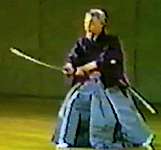
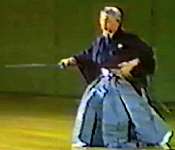
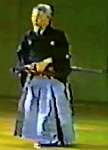
Mune no katana
Start in seiza. Teki, sitting in front, grabs your lapel. Since teki is close you grab the sword with both hands at once. Draw upward to threaten his wrist while advancing the right foot slightly to the right. Move the left knee to the right foot while lowering the sword to horizontal on the left, then perform a two-handed horizontal cut at do level while advancing the right foot. Rise and advance the left foot to shizentai while raising the sword, move the right foot backwards and lower onto the right knee while performing kiriotoshi. Rise to jodan etc.
Tsuka hazushi
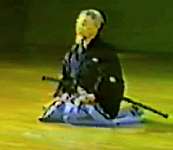
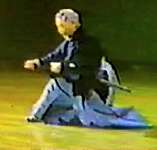
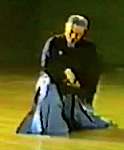
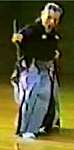
Start in seiza. Teki is sitting in front slightly to the right. As he grasps his tsuba with the left hand, so do you. He then grasps your tsuka with his right hand and attempts to draw your sword. Grasp the end of your tsuka from below, move the right foot forward and hit him (tsuka ate), then turn 90° to the right to pull him off balance, turn 135° left while moving the tsuka in a big circle to throw teki. Your edge should now face down. Draw the sword and rise while making a cut to tekis neck. Bring the left foot next to the right while taking jodan, draw the right foot back (straight, so you face shomen again) and drop to the knee while cutting to horizontal. Rise to jodan, etc.
Tsuki tome
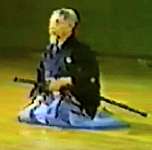
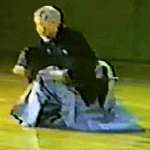
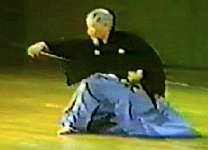
Start in seiza. This is a rather weird kata where you strike down a tsuki with your tsuka (sword edge pointing down), while placing the right foot next to the left knee. Then draw the left foot back far (knee hovers) while cutting nukitsuke over his arms, then step with left foot forward and cut. Jodan etc.
Shiranami
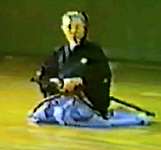
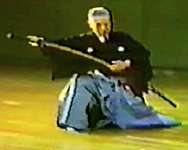
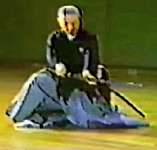
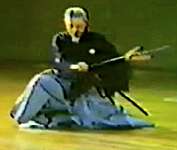
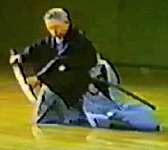
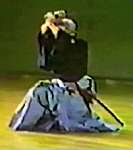
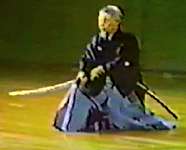
This kata was demonstrated only. It starts in seiza, and there are 2 tekis, one in front and one on the left. Look to the left and start drawing, advance the right foot and manipulate the sword to soetetsuki position as in MSR Iwanami (but facing the front, without turning to the left) then tsuki to the left with a stomp of the right foot. Throw the left teki in front of you, still with the left hand on the mune. The left hand is placed on the hip, then perform a frontal one-handed ukenagashi deflection with the tip to the right. Cut down with both hands. Rise to jodan while stepping back with the right foot, etc.
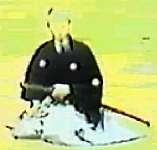
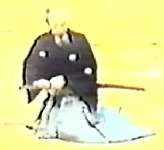
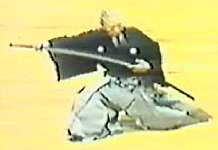
Nigemi
Start standing. There are two opponents converging on you from both sides (like a Y). At the 3rd step cut a low nukitsuke (elbow level) to the left, look right, perform ashi sabaki while turning to the right front and perform uke nagashi (one hand). Again perform ashi sabaki (may be with a jump) while performing a kesa giri, ending with the left knee on the floor, facing shomen. Rise and perform chinugui ( as in seitei ukenagashi) without resting the blade on the knee. Perform gyaku noto (without sitting down). The right hand must change to normal grip before sliding off the tsuka.
Oitachi
At the 3rd step draw and cut men à la seitei morotetsuki, turn 180° and cut (without stepping forward), turn back and cut again. Step back to jodan, lower the sword to horizontal while dropping on the right knee with the feeling of pushing down teki. Take the sword in gyakuto grip, almost vertical (without changing position) and let blood drip off. This used to be a tsuki but soke didn't like that. Perform gyaku noto while standing up and moving the right foot forward next to the left, taking care to keep the tsuka pointing to the right (to prevent teki from hanging on to it- maybe that tsuki was not a bad idea after all).
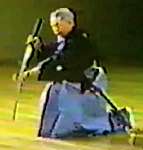
Chojo
From seiza, draw the sword and furikaburi while taking sonkyo, jump forward 6 meters, perform kiriotoshi while landing on your knees (with ki-ken-tai-ichi feeling), yoko chiburi and noto. You can just walk back, without jumping.
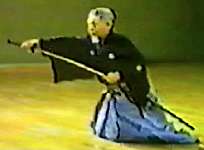
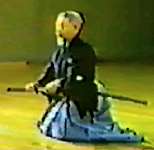
Statement by Michael Alexanian, Branch Manager and Principal Instructor of the United States Tamiya Ryu Iaijutsu Michigan Dojo and a direct Deshi (Student) of Tsumaki Kazuo Sensei and his Father, Tsumaki Seirin Motonobu Soke, the current and 14th Headmaster.
"The Author has, in my opinion, done a very nice job of summarizing the 11 Omote no Maki Kata, providing Kata Photos from the "Nihon Kobudo" Series video on Tamiya Ryu Iaijutsu (this entire Series has recently been re-released, I understand). However, people wishing to practice this particular Koryu Art should understand that many Okuden, or Oral Teachings exist for each of these Kata, and that these can only be acquired through training with a qualified Instructor of Tamiya Ryu Iaijutsu. Readers should be aware that there is much more to each Kata beyond the scope of the basic information given in this article. Any Koryu System should always be learned and practiced with a qualified Instructor, as opposed to using only a book or picture or video as the sole source for information about individual Kata. This article is a marvelous introduction to Omote no Maki Kata for those unfamiliar with Tamiya Ryu Iaijutsu."
Official Insignia (Mon) of the The
United States Tamiya Ryu Iaijutsu Michigan Dojo